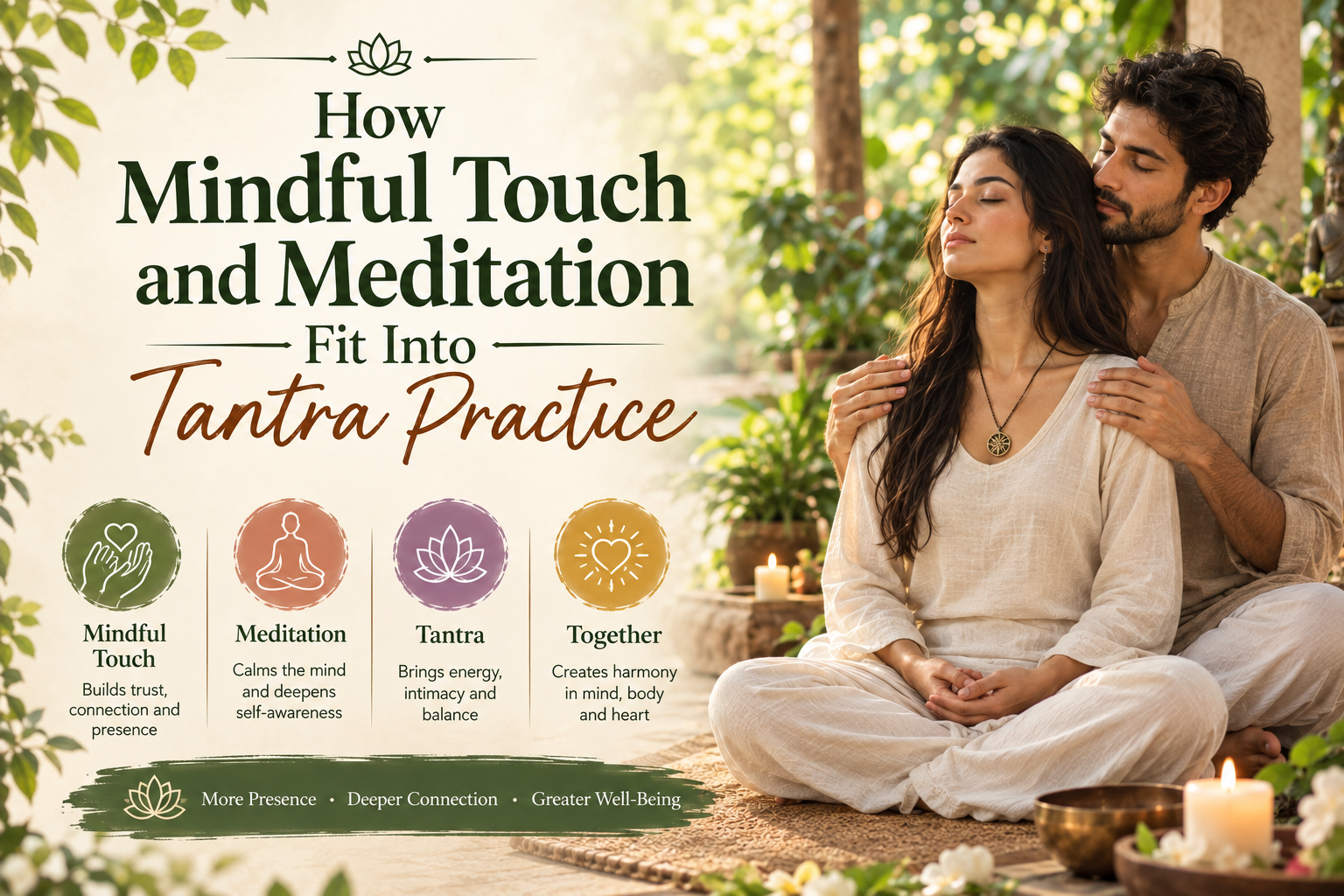
How Mindful Touch and Meditation Fit Into Tantra Practice
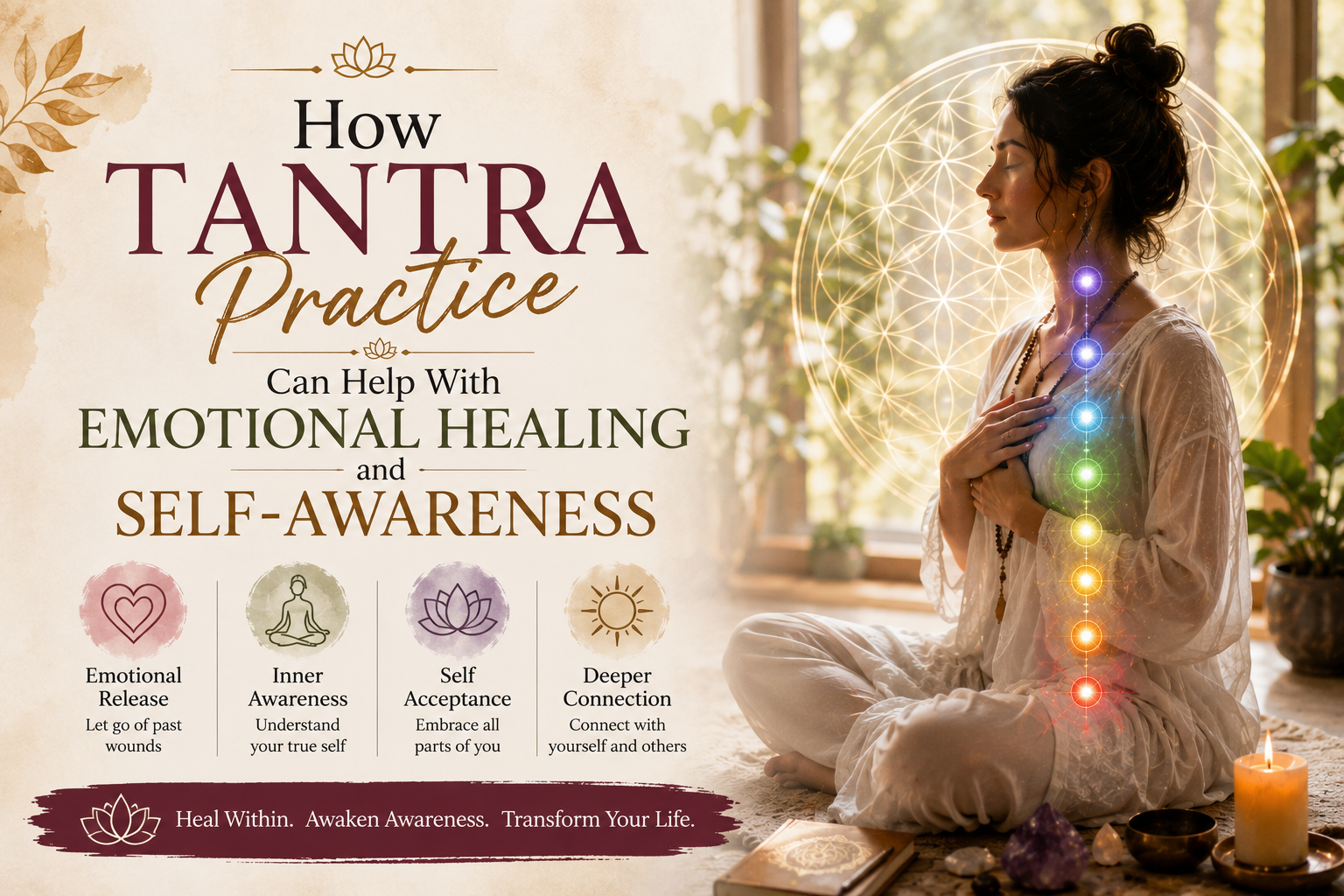
Tantra is often misunderstood because of the way it is portrayed in popular culture. In its traditional and contemporary wellness contexts, Tantra can involve much more than physical practices. It can include meditation, breath awareness, mindful movement, conscious presence, and practices designed to deepen awareness of the body and mind.
Two practices that can complement a mindful approach to Tantra are meditation and mindful touch. When practiced with awareness, consent, clear boundaries, and respect, they can encourage relaxation, presence, self-awareness, and a deeper connection with one\'s physical and emotional experience.
At AAdi Spiritual, Tantra is approached as a holistic practice that can support greater awareness of the mind, body, and inner experience.
What Is Tantra Practice?
Tantra is a broad spiritual tradition with roots in South Asian traditions. It encompasses different teachings and practices, including meditation, mantra, visualization, breathwork, rituals, and approaches to cultivating awareness.
Rather than viewing the body as separate from spiritual life, many Tantric approaches emphasize becoming more conscious of the body, thoughts, emotions, sensations, and energy.
Modern interpretations of Tantra vary considerably. Therefore, it is important to distinguish traditional Tantric philosophy from commercial or sensationalized versions of Tantra.
At its heart, a mindful approach to Tantra can encourage people to become more present rather than simply seeking an intense experience.
The Role of Meditation in Tantra
Meditation can provide an important foundation for Tantric practice.
Through meditation, a person can learn to observe thoughts, emotions, breathing patterns, and bodily sensations without immediately reacting to them. This can help develop present-moment awareness.
A simple meditation practice may involve:
-
Sitting comfortably and noticing the breath
-
Observing bodily sensations
-
Bringing attention back when the mind wanders
-
Practicing non-judgmental awareness
-
Allowing thoughts and emotions to arise without immediately acting on them
With regular practice, meditation may help a person become more aware of subtle changes in their physical and emotional state.
This awareness can also influence how mindful touch is experienced.
What Is Mindful Touch?
Mindful touch means bringing conscious attention to physical contact and bodily sensations.
Instead of touching automatically or focusing only on an outcome, mindful touch emphasizes presence, communication, comfort, and awareness.
Depending on the context, mindful touch may involve simple practices such as placing a hand gently on one\'s own body, mindful massage, or other forms of appropriate and consensual touch.
The intention is not to create pressure or expectation. Instead, the focus is on noticing sensations and remaining present.
For any practice involving another person, explicit consent and personal boundaries are essential.
How Meditation and Mindful Touch Work Together
Meditation and mindful touch can complement each other because both encourage attention to the present moment.
Meditation primarily develops awareness through stillness and observation. Mindful touch introduces physical sensation into that awareness.
For example, during a mindfulness practice, a person may notice:
-
The rhythm of their breathing
-
Tension in the shoulders
-
Warmth or coolness in the body
-
Changes in muscle tension
-
Emotional responses to particular sensations
-
Whether they feel relaxed or uncomfortable
This type of awareness can help someone become more familiar with their own body.
In a Tantric framework, this increased awareness can become part of a broader practice of being present with the whole experience rather than separating physical sensations from emotional and mental awareness.
Mindful Touch Is About Awareness, Not Performance
One of the most important principles of mindful touch is that it does not need to be performance-oriented.
The goal can simply be to notice what is happening in the present moment.
Instead of asking:
“What should I feel?”
a mindful approach asks:
“What am I experiencing right now?”
This small change in attention can make a practice more reflective and personal.
It can encourage a person to notice physical comfort, emotional responses, boundaries, and patterns of tension without judging them.
The Importance of Consent and Boundaries
Any practice involving another person\'s body should be based on clear and informed consent.
Consent should be:
-
Freely given
-
Clear
-
Specific
-
Ongoing
-
Respected at every stage
A person should always feel comfortable saying no, stopping a practice, or changing their boundaries.
Professional practitioners should also maintain appropriate ethical boundaries and create an environment where clients can communicate their comfort level openly.
These principles are especially important when discussing Tantra because misconceptions about the practice can sometimes blur the distinction between spiritual wellness practices and sexual activity.
Can Mindful Touch Support Relaxation?
Gentle, appropriate touch can be relaxing for some people, particularly when it takes place in a comfortable environment and is fully consensual.
Combined with slow breathing and meditation, mindful touch may help shift attention away from constant mental activity and toward present bodily sensations.
However, individual experiences differ. Mindful touch and meditation should not be presented as guaranteed treatments for medical or psychological conditions.
People experiencing significant physical or emotional difficulties should seek guidance from an appropriately qualified healthcare professional.
Creating a Simple Mindful Tantra Practice
A simple awareness practice does not need to be complicated.
Step 1: Create a Comfortable Environment
Choose a quiet space where you can sit or lie comfortably without unnecessary distractions.
Step 2: Begin With Your Breath
Take a few slow, comfortable breaths. Notice the natural rhythm of inhalation and exhalation without forcing it.
Step 3: Notice Your Body
Bring your attention gradually through different areas of your body. Notice areas of relaxation, tension, warmth, coolness, or other sensations.
Step 4: Practice Gentle, Appropriate Touch
If comfortable, place your hands gently on an area such as your shoulders, arms, or hands. Notice the sensation of contact without trying to create a particular result.
Step 5: Return to Awareness
If thoughts become distracting, gently bring your attention back to your breathing and physical sensations.
Step 6: Finish Slowly
Take a moment to notice how you feel before returning to your normal activities.
The purpose is not to force an experience. It is to cultivate awareness.
Tantra, Meditation and Self-Awareness
One of the valuable aspects of a mindful approach to Tantra is the opportunity to develop a stronger relationship with one\'s own experience.
Meditation can encourage awareness of thoughts and emotions. Body awareness can encourage recognition of physical sensations. Mindful touch can bring attention to the body\'s immediate experience.
Together, these practices can create opportunities for reflection and greater presence.
For some people, this may become part of a broader personal wellness routine that includes meditation, breathwork, yoga, mindful movement, journaling, or other contemplative practices.
Why Mindfulness Matters in Modern Life
Modern lifestyles often involve constant notifications, screens, work demands, and mental stimulation. It can be difficult to spend even a few minutes simply noticing what is happening within the body and mind.
Mindfulness offers an opportunity to slow down.
Tantra, when approached through awareness rather than misconception, can similarly encourage people to become more conscious of their experiences.
The combination of meditation and mindful body awareness can therefore be relevant to people who are looking for ways to reconnect with themselves and create more intentional moments in their daily lives.
A Conscious Approach to Tantra at AAdi Spiritual
At AAdi Spiritual, Tantra can be explored as a practice of awareness, presence, and holistic wellbeing.
Mindful touch and meditation can be viewed as complementary practices that encourage people to become more aware of their body, breath, sensations, and inner experience.
The emphasis should always remain on respect, consent, personal boundaries, presence, and conscious awareness.
Tantra does not have to be mysterious or sensationalized. When approached thoughtfully, it can provide a space for exploring the relationship between body, mind, awareness, and personal wellbeing.
Final Thoughts
Mindful touch and meditation can fit naturally into a contemporary, awareness-based approach to Tantra.
Meditation helps cultivate attention and presence, while mindful touch can bring that awareness into direct contact with bodily sensations. Together, they can encourage relaxation, self-awareness, and a deeper appreciation of the present moment.
The most important part is not the technique itself but the quality of awareness brought to the practice.
For anyone exploring Tantra, approaching these practices with patience, respect, consent, and an open mind can help create a more grounded and meaningful experience.
AAdi Spiritual encourages a holistic understanding of Tantra—one that recognizes the connection between awareness, body, mind, and inner wellbeing.