What Happens When You Meditate Every Day for 30 Days?
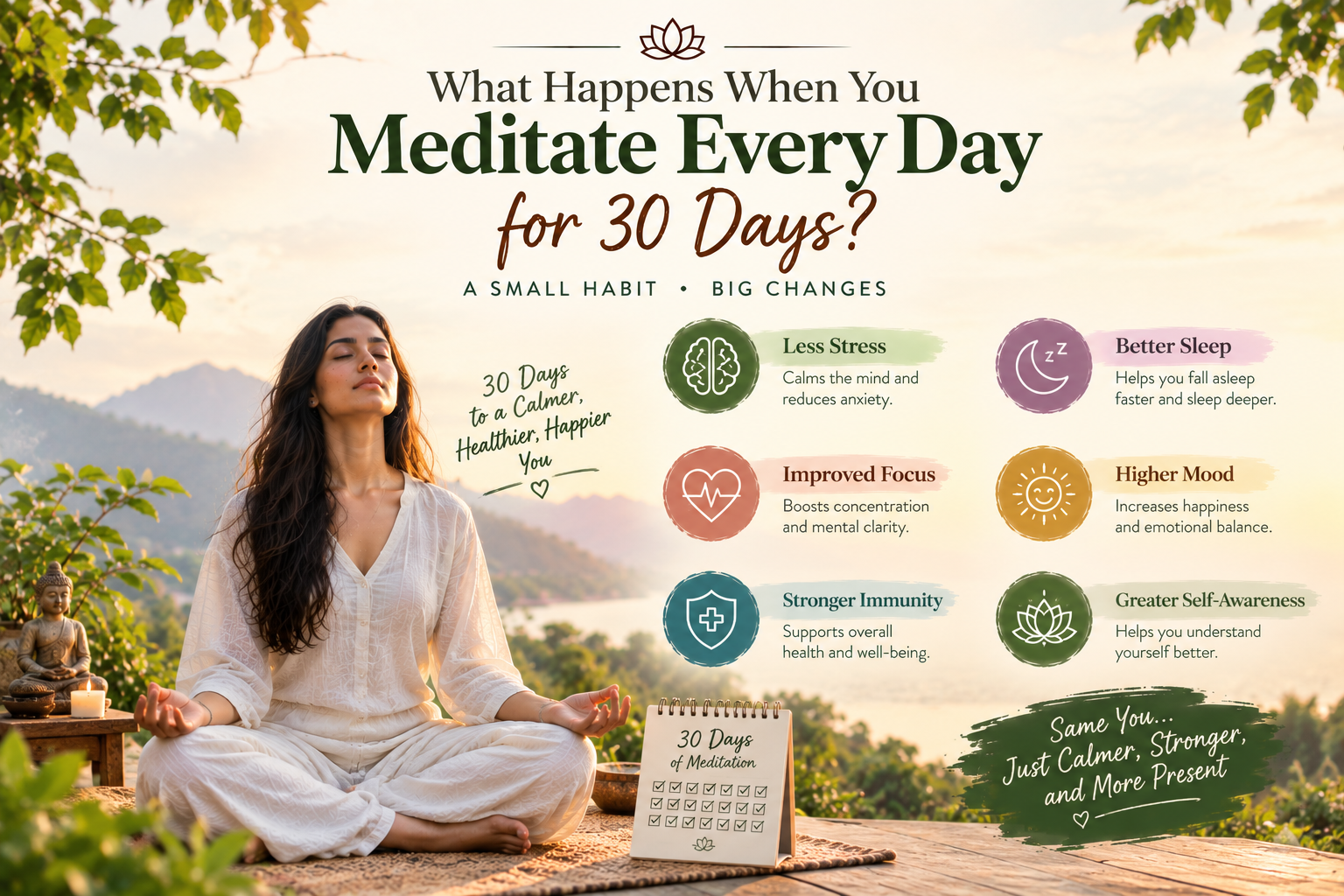
Have you ever wondered what would happen if you spent just 10–15 minutes meditating every day for 30 days? Could it help you feel calmer, improve your focus, manage everyday stress, and develop a deeper connection with yourself?
In today\'s fast-paced world, our minds are constantly occupied with work, responsibilities, social media, and future worries. Finding a moment of peace can feel difficult. This is where meditation comes in. It is a simple mindfulness practice that encourages you to slow down, observe your thoughts, and become more aware of the present moment.
At AAdi Spiritual, we believe that small, consistent steps toward self-awareness can support a more balanced and mindful lifestyle. While meditation does not produce the same results for everyone, practising it regularly for 30 days can help you understand your mind better and build a healthier daily routine.
Let\'s explore what you might experience when you meditate every day for a month.
What Is Daily Meditation?
Meditation is a practice that involves training your attention and awareness. It may include focusing on your breath, repeating a calming phrase, observing your thoughts, or paying attention to bodily sensations without judging them.
You do not need special equipment, a particular religious belief, or years of experience to begin. A quiet corner and a few minutes of your time are enough to get started.
The goal is not to stop thinking completely. Instead, meditation helps you notice when your attention wanders and gently bring it back to the present moment.
What Happens During the First 7 Days of Meditation?
The first week is usually about learning the basics and building consistency. You may notice a few changes, but you might also find the practice challenging at first.
1. You Become More Aware of Your Thoughts
When you sit quietly, you may realise how many thoughts pass through your mind. You might think about unfinished work, personal relationships, daily responsibilities, or things that happened in the past.
This is normal. Meditation helps you observe these thoughts instead of automatically reacting to every one of them.
Over time, this awareness may help you recognise recurring thought patterns and respond to everyday situations more thoughtfully.
2. You Learn to Slow Down
Many people move through the day without taking a proper pause. Even during moments of rest, they may continue checking their phones or thinking about their next task.
A short meditation session creates an opportunity to slow down. Paying attention to your breathing can help you become more present and give your mind a break from constant activity.
3. Sitting Still May Feel Difficult
You might feel restless, distracted, or impatient during your first few sessions. Some people even become more aware of uncomfortable emotions when they sit quietly.
Do not assume that you are meditating incorrectly. Distraction is a natural part of the process.
Start with five minutes, keep your posture comfortable, and return your attention to your breath whenever your mind wanders.
What Changes After 2 Weeks of Daily Meditation?
During the second week, meditation may begin to feel more familiar. You might find it easier to make time for the practice and recognise when your attention drifts.
4. You May Handle Everyday Stress More Mindfully
Meditation is not a way to eliminate every stressful situation. However, mindfulness practices may help some people become more aware of their emotional reactions.
For example, when a difficult conversation or demanding task makes you feel overwhelmed, you may begin to notice your reaction before responding.
Instead of immediately acting on frustration, you can pause, take a few steady breaths, and consider your next step.
This small change can support more thoughtful responses in daily life.
5. Your Attention May Become More Focused
Modern life offers endless distractions, from notifications to constant online content. Regular meditation gives you an opportunity to practise directing your attention toward one thing at a time.
Whenever you notice your mind wandering and bring it back to your breath, you are practising attention control.
With consistency, some people notice that this skill becomes useful when reading, studying, working, or completing everyday tasks. The extent of improvement varies from person to person.
6. You May Become More Aware of Your Emotions
Meditation encourages you to notice feelings without immediately labelling them as good or bad.
You may become more aware of when you feel anxious, irritated, peaceful, or overwhelmed. Recognising these emotions can help you understand what you are experiencing before deciding how to respond.
Emotional awareness does not mean that difficult feelings disappear. It means learning to acknowledge them with greater patience and self-understanding.
What Happens After 3 Weeks of Meditation?
By the third week, your routine may begin to feel more natural. You might find it easier to sit quietly, follow your breathing, and return to meditation after a busy day.
7. You May Develop Greater Self-Awareness
Regular meditation creates space to reflect on your habits, reactions, and priorities.
You may begin to notice situations that trigger stress, activities that drain your energy, or habits that make it difficult to stay present.
This awareness can encourage healthier choices. For example, you might recognise the need to take breaks, reduce unnecessary screen time, or create more space for rest.
8. You May Become More Patient
Meditation teaches you to return to the present moment repeatedly. This process can encourage patience, especially when your thoughts are racing or your attention feels scattered.
You may also become more conscious of how quickly you react to minor frustrations.
Although meditation does not guarantee that you will always feel calm, it can offer an opportunity to practise responding with greater awareness rather than reacting automatically.
9. You May Feel More Connected to the Present Moment
It is easy to spend much of the day thinking about yesterday or worrying about tomorrow.
Mindfulness meditation encourages you to notice what is happening right now: the sensation of breathing, the sounds around you, or the feeling of your feet touching the ground.
Practising this awareness may help you appreciate ordinary moments and feel less caught up in constant mental activity.
What Happens After 30 Days of Daily Meditation?
After 30 days, you may have a clearer understanding of how meditation affects your daily life. Rather than expecting a dramatic transformation, look for small, meaningful changes.
10. Meditation May Become a Healthy Habit
One of the most valuable outcomes of a 30-day meditation challenge is developing consistency.
When you practise at the same time each day, meditation can gradually become part of your routine, just like exercising, reading, or taking a morning walk.
You may find it easier to make time for yourself, even on busy days.
Remember that missing a session does not mean you have failed. Simply begin again the next day.
11. You May Find It Easier to Pause Before Reacting
With regular practice, you may become more familiar with the connection between your thoughts, emotions, and behaviour.
For example, instead of responding immediately when something upsets you, you might recognise the feeling, take a breath, and choose a more considered response.
This ability to create a pause can be useful in personal relationships, professional situations, and everyday challenges.
12. You May Experience Improvements in Well-Being
Research suggests that mindfulness meditation can help some people manage stress and may offer benefits for anxiety, mood, and overall psychological well-being.
However, results differ according to the individual, the type of meditation, the amount of practice, and other factors.
Some people feel more relaxed after a session, while others notice gradual changes over several weeks. Some may experience little noticeable difference after 30 days.
Meditation should be viewed as one possible part of a balanced approach to well-being, rather than a guaranteed solution to every emotional or physical difficulty.
How to Meditate Every Day for 30 Days
You do not need to meditate for an hour every day to begin building a routine. Start small and increase your practice at a comfortable pace.
Follow this simple 30-day meditation plan.
Days 1–7: Build the habit
-
Set aside five minutes each day.
-
Sit comfortably in a quiet place.
-
Close your eyes if comfortable, or keep them softly focused.
-
Notice your natural breathing without forcing it.
-
Gently return your attention to your breath when distracted.
Days 8–14: Develop consistency
-
Increase your session to 5–10 minutes if comfortable.
-
Try meditating at the same time each day.
-
Notice your thoughts without criticising yourself.
-
Pay attention to how you feel before and after each session.
Days 15–21: Explore mindfulness
-
Practise observing your thoughts and emotions.
-
Try a simple body scan, noticing sensations throughout your body.
-
Include mindful breathing during short breaks in your day.
-
Notice when you become distracted and gently return to the present.
Days 22–30: Make meditation part of your lifestyle
-
Practise for 10–15 minutes if it feels manageable.
-
Reflect on any changes in your attention, stress levels, or awareness.
-
Experiment with guided meditation or loving-kindness meditation.
-
Decide how you would like to continue after the 30 days.
The most important part of this challenge is not achieving a perfect meditation session. It is showing up regularly and approaching yourself with patience.
Tips to Make Your 30-Day Meditation Challenge Successful
Building a lasting meditation habit becomes easier when you keep your expectations realistic.
Choose a Consistent Time
Morning meditation can help you begin your day with a moment of quiet, while evening meditation may provide an opportunity to unwind. Choose a time that fits your schedule.
Create a Comfortable Space
You do not need an elaborate meditation room. A quiet corner, comfortable clothing, and a supportive sitting position are enough.
Avoid Judging Your Progress
Some sessions will feel peaceful, while others may be filled with distractions. Both are part of the learning process.
Instead of asking whether you meditated perfectly, ask whether you gave yourself a few minutes of mindful attention.
Keep Your Practice Simple
Start with breathing meditation if you are a beginner. Once you feel comfortable, you can explore guided mindfulness, body scans, or other approaches.
Be Patient With Yourself
Meditation is a practice, not a competition. Avoid expecting instant results or comparing your experience with someone else\'s.
If focusing inward makes you feel significantly distressed, try shorter sessions, keep your eyes open, or focus on external sounds. You can also pause the practice and seek guidance from a qualified professional if discomfort continues.
Can Meditation Help With Spiritual Growth?
For many people, meditation is more than a relaxation technique. It can also be a way to explore self-awareness, personal values, and a deeper sense of connection with life.
From a spiritual perspective, meditation may encourage you to observe your thoughts without identifying completely with them. It can create space for reflection, gratitude, compassion, and a greater appreciation of the present moment.
In traditions that include Tantra, yoga, and other contemplative practices, meditation may be combined with breath awareness, mantra repetition, or other methods of focused attention.
These practices vary across traditions, so it is helpful to learn from reliable sources and experienced teachers when exploring a specific spiritual path.
At AAdi Spiritual, we encourage a thoughtful approach to spiritual wellness that respects individual experiences and recognises the value of consistent, mindful practice.
Is Meditating Every Day for 30 Days Enough?
Thirty days can be a useful starting point, but it is not a universal timeline for experiencing particular results.
You may develop a more consistent routine, become more aware of your thought patterns, or discover a meditation style that suits you. Other changes, such as improvements in stress management or attention, may require continued practice and may not occur for everyone.
The purpose of a 30-day challenge is to explore the practice and learn what works for you.
If you find meditation helpful, you can continue with a manageable routine. If one approach does not suit you, consider a different technique or seek guidance from a qualified meditation teacher.
Meditation is not a replacement for professional mental health care when it is needed.
Frequently Asked Questions (FAQs)
1. What happens if I meditate every day for 30 days?
You may develop greater awareness of your thoughts, establish a consistent mindfulness habit, and find new ways to respond to everyday stress. Results vary, and noticeable changes are not guaranteed.
2. How long should I meditate every day?
Beginners can start with five minutes per day and gradually increase to 10–15 minutes if comfortable. Consistency is more important than choosing a long session.
3. Can meditation reduce stress?
Research suggests that mindfulness meditation may help some people manage stress. Its effects vary, and it works best as part of a broader approach to well-being.
4. Is it normal to have many thoughts during meditation?
Yes. Having thoughts during meditation is completely normal. The practice involves noticing when your mind wanders and gently returning your attention to your chosen focus.
5. Is morning or evening meditation better?
Neither is universally better. Morning meditation may help establish a daily routine, while evening practice may help you slow down after a busy day. Choose the time you can maintain comfortably.
6. Can meditation support spiritual wellness?
Meditation may support self-reflection, mindfulness, and a sense of connection for people who include it in their spiritual practice. The experience is personal and can differ across traditions.
Final Thoughts: Small Daily Practice, Meaningful Self-Discovery
Meditating every day for 30 days is an opportunity to slow down, become more aware of your inner world, and develop a consistent mindfulness habit.
You may discover that you notice your thoughts more clearly, pause before reacting, or make more space for quiet moments in your daily life. You may also find that progress is gradual, with some sessions feeling easier than others.
You do not need to change your entire lifestyle overnight. Start with five minutes, breathe naturally, and give yourself permission to learn at your own pace.
Begin your 30-day meditation journey today and discover how a few mindful minutes can become a meaningful part of your daily routine.
At AAdi Spiritual, our aim is to encourage greater awareness, balance, and personal exploration through spiritual wellness and mindful practices. Take your first step toward a more mindful life, one breath at a time.