How Tantra Practice Can Help With Emotional Healing and Self-Awareness
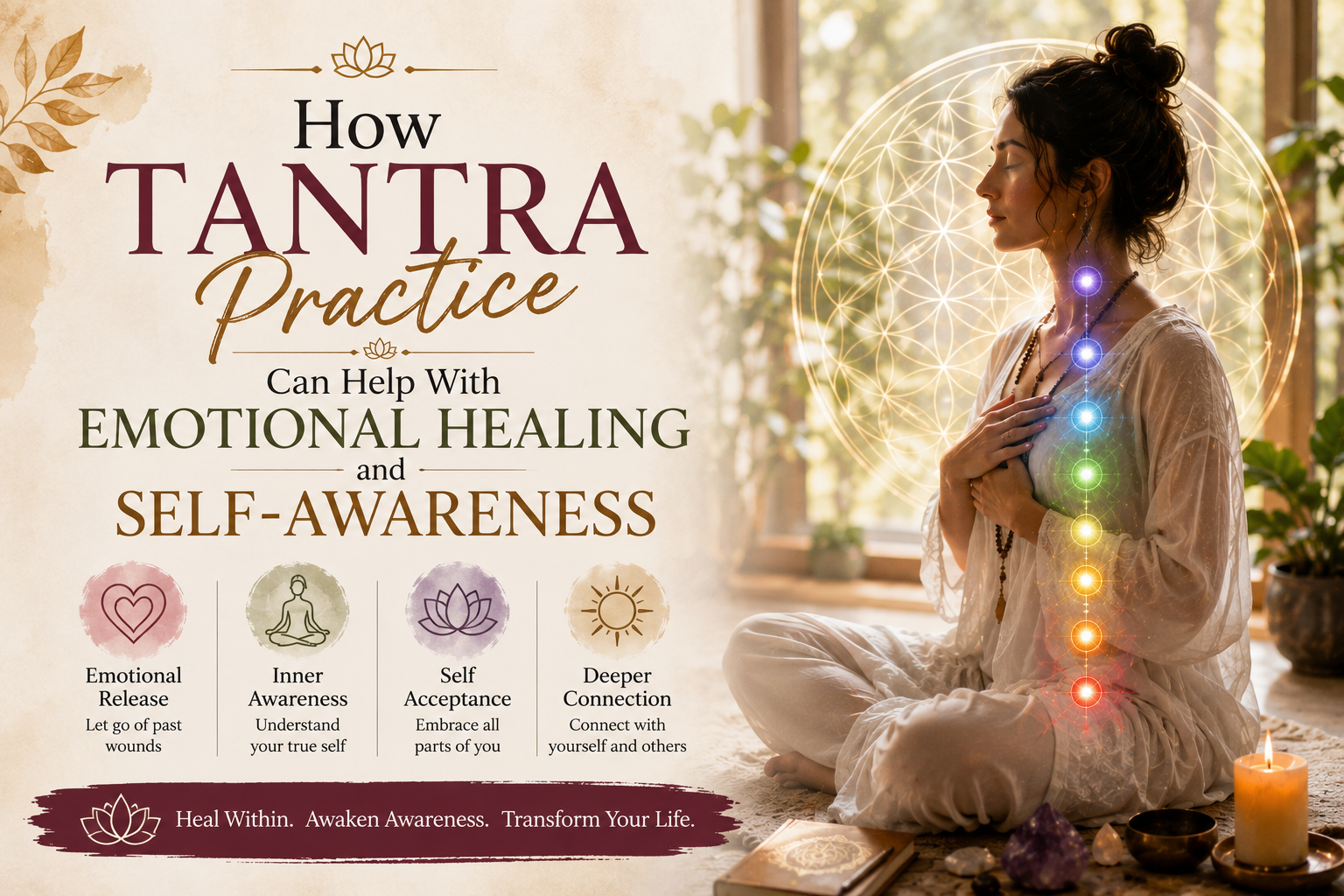
In today’s fast-paced world, it is easy to become disconnected from our emotions, our bodies, and even from ourselves. Stress, emotional pressure, relationship challenges, and constant distractions can make it difficult to understand what we truly feel and need.
Tantra practice offers a mindful approach to reconnecting with yourself. Rather than being limited to misconceptions about sexuality, authentic Tantra is a broader spiritual tradition that can involve meditation, breath awareness, mindful movement, conscious touch, and deeper self-observation.
At AAdi Spiritual, Tantra is approached as a journey of self-awareness, presence, and inner connection. With consistent and respectful practice, it may help individuals become more aware of their emotions, thoughts, bodily sensations, and patterns of behaviour.
What Is Tantra?
Tantra is a diverse collection of spiritual traditions that developed in South Asia. Different Tantric traditions use different practices, but many emphasize awareness, consciousness, embodiment, and the transformation of one\'s relationship with everyday experience.
Modern discussions often reduce Tantra to intimacy or sexuality. However, Tantra is much broader than that. Practices may include:
-
Meditation and mindfulness
-
Breath awareness
-
Mantra and visualization
-
Mindful movement
-
Body awareness
-
Conscious touch within appropriate boundaries
-
Contemplative and spiritual practices
The central idea is presence—learning to experience yourself and the present moment with greater awareness rather than automatically reacting to every thought or emotion.
How Tantra May Support Emotional Healing
Emotional healing is not about suppressing difficult feelings or pretending that everything is positive. It can involve developing the awareness and emotional capacity to recognize what you are experiencing and respond to it with greater understanding.
Tantric practices may support this process in several ways.
1. Becoming More Aware of Your Emotions
Many people move through their day without noticing what they are actually feeling. Anger may appear as irritation, sadness may appear as withdrawal, and anxiety may show up as restlessness.
Mindful Tantra practices encourage you to slow down and observe your internal experience.
Instead of immediately asking, “How can I get rid of this feeling?”, you can begin with:
“What am I experiencing right now?”
This simple shift can create space between an emotion and your reaction to it.
2. Reconnecting With the Body
Emotions are often experienced physically. You may notice tension in your shoulders, heaviness in your chest, changes in breathing, or tightness in your stomach.
Body-awareness practices can help you become more attentive to these sensations.
By bringing gentle awareness to the body, you may begin recognizing physical signs of stress and emotional discomfort earlier. Over time, this can encourage a deeper connection between your mind and body.
3. Learning to Be Present
Constant thinking about the past or worrying about the future can make it difficult to experience the present moment.
Meditation and breath-awareness practices associated with Tantra can encourage greater presence.
When attention returns to the breath, body, or immediate surroundings, the mind gets an opportunity to slow down. Regular practice may help develop a greater sense of calm and awareness in everyday situations.
4. Understanding Emotional Patterns
Self-awareness means more than knowing how you feel. It also involves noticing why you respond in certain ways.
For example, you may notice that criticism makes you defensive, conflict makes you withdraw, or uncertainty causes excessive thinking.
Through mindful observation, you can begin identifying recurring patterns without immediately judging yourself.
This awareness can become the first step toward making more conscious choices.
5. Developing Self-Acceptance
Emotional growth becomes difficult when we constantly judge ourselves for having certain thoughts or feelings.
Tantric philosophy often emphasizes embracing experience with awareness rather than creating unnecessary divisions between what we consider “good” and “bad.”
This does not mean accepting harmful behaviour. Instead, it means learning to observe your inner world honestly.
You can acknowledge:
“This is what I am feeling right now.”
Without immediately turning that feeling into shame or self-criticism.
Tantra and Self-Awareness
Self-awareness is the ability to recognize your thoughts, emotions, physical sensations, habits, values, and reactions with greater clarity.
Tantra can encourage this awareness by bringing attention to the whole experience of being human.
Instead of living primarily through the mind, practices may invite you to notice:
-
What your body is communicating
-
How your breathing changes
-
What emotions are present
-
Which thoughts repeatedly appear
-
How you react to situations
-
What brings you a sense of connection
-
Where you may be holding tension or resistance
This process can help you develop a more conscious relationship with yourself.
Can Tantra Help With Stress and Overthinking?
Many people explore meditation and spiritual practices because they want to manage everyday stress and mental restlessness.
Breath awareness, meditation, mindful movement, and relaxation practices can encourage a shift from constant mental activity toward greater present-moment awareness.
However, Tantra should not be presented as a guaranteed treatment for anxiety, depression, trauma, or other mental health conditions. If you are experiencing significant emotional distress, professional mental-health support can be important.
Tantra can be viewed as a complementary spiritual and self-awareness practice, rather than a replacement for appropriate medical or psychological care.
The Role of Conscious Touch
Some modern Tantra practices incorporate conscious touch. When practiced responsibly, touch can be approached as an exercise in presence, communication, boundaries, and awareness—not simply as physical intimacy.
The most important principles are:
Consent. Boundaries. Respect. Communication. Awareness.
Conscious touch should always be voluntary and mutually agreed upon. No spiritual practice should pressure someone to participate in physical contact that makes them uncomfortable.
For people who choose to explore it, mindful touch can encourage greater awareness of bodily sensations and interpersonal connection.
Simple Tantric Practices for Everyday Self-Awareness
You do not necessarily need a complicated ritual to begin developing greater awareness.
Try this simple practice:
Step 1: Sit Quietly
Find a comfortable and private space. Sit in a relaxed position and allow your body to settle.
Step 2: Observe Your Breath
Notice the natural rhythm of your breathing without trying to control it.
Step 3: Scan Your Body
Slowly bring your attention from your head to your feet. Notice areas of comfort, tension, warmth, heaviness, or movement.
Step 4: Notice Your Emotions
Ask yourself:
“What am I feeling right now?”
There is no need to change the emotion. Simply observe it.
Step 5: Observe Without Judgment
If thoughts appear, notice them and gently return your attention to your breath and body.
Even five to ten minutes of regular practice can become an opportunity to reconnect with yourself.
Tantra Is a Journey, Not a Quick Fix
Emotional healing and self-awareness generally develop gradually. Tantra is not a shortcut that instantly removes difficult emotions.
Instead, it can provide practices for slowing down, observing yourself, becoming more present, and developing a deeper relationship with your inner experience.
With consistent practice, you may begin to notice subtle changes in the way you respond to stress, relationships, emotions, and everyday experiences.
The goal is not to become someone different.
It is to become more aware of who you already are.
Begin Your Inner Journey With AAdi Spiritual
At AAdi Spiritual, Tantra is explored as a pathway toward greater awareness, presence, connection, and inner growth.
Whether you are completely new to Tantra or looking to deepen an existing spiritual practice, approaching Tantra with openness, respect, proper guidance, and clear boundaries can make the journey more meaningful.
Emotional healing begins with awareness. When you learn to pause, breathe, listen to your body, and observe your inner world, you create more space for understanding and conscious growth.
Your journey inward can begin with a single moment of awareness.
Explore Tantra and spiritual wellness with AAdi Spiritual and take a mindful step toward deeper self-awareness and inner connection.