The Role of Breathwork in Deep Tantra Practice
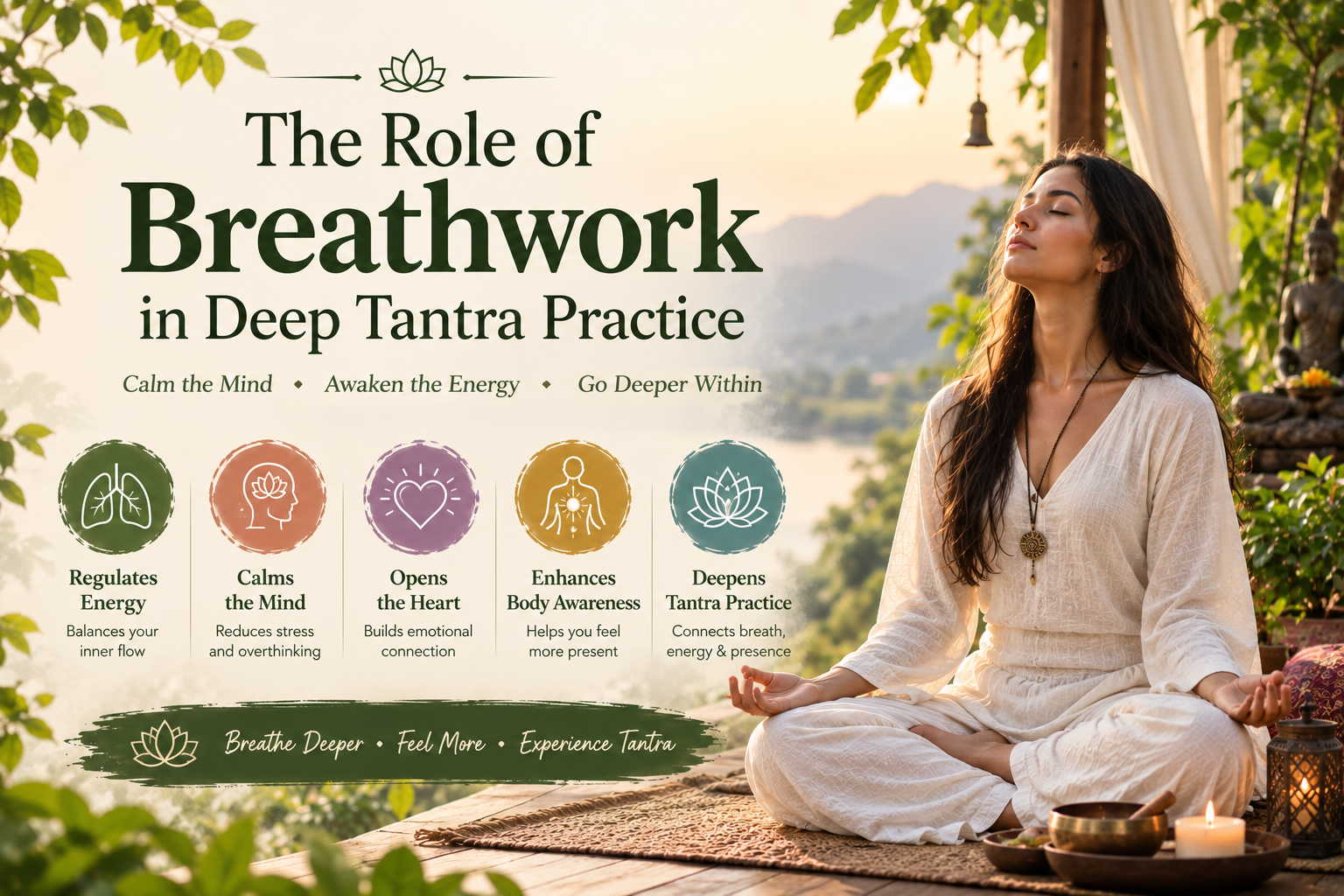
In the practice of Tantra, the breath is much more than a natural process that keeps the body functioning. It can become a powerful tool for developing awareness, calming the mind, connecting with the body, and cultivating inner balance.
At AAdi Spiritual, breathwork is understood as an important part of a deeper spiritual and mindful practice. When combined with meditation, body awareness, and conscious presence, intentional breathing can help practitioners become more connected to themselves and their inner experience.
What Is Breathwork?
Breathwork refers to conscious and intentional breathing practices designed to influence awareness, relaxation, and the relationship between the body and mind.
Unlike ordinary breathing, which happens automatically, conscious breathing invites you to pay attention to the rhythm, depth, and movement of your breath.
Different traditions use different breathing techniques, but the underlying principle is simple: when you become aware of your breath, you create an opportunity to become more aware of yourself.
Why Is Breath Important in Tantra?
Tantra traditionally places emphasis on awareness, presence, and the connection between different aspects of human experience.
The breath provides a natural bridge between the physical body and the mind. When attention is brought gently to breathing, it can become easier to notice thoughts, emotions, physical sensations, and patterns of tension.
In deep Tantra practice, this awareness can support:
-
Greater mindfulness and presence
-
A calmer and more focused mind
-
Deeper connection with bodily sensations
-
Emotional awareness
-
Relaxation and stress management
-
Improved concentration during meditation
-
A stronger sense of inner balance
Rather than trying to force a particular experience, conscious breathing encourages practitioners to observe what is happening within them.
Breathwork and Mind-Body Awareness
Modern lifestyles often keep people mentally busy. Constant notifications, work pressure, social media, and everyday responsibilities can make it difficult to slow down and reconnect with the present moment.
Breathwork offers a simple way to pause.
By bringing attention to the natural movement of the breath, you can begin noticing how your body responds to stress, excitement, anxiety, relaxation, or different emotional states.
For example, you may notice that your breathing becomes faster when you feel stressed or naturally slows when you feel relaxed.
This observation can develop greater self-awareness without requiring you to judge or change every sensation.
The Connection Between Breathwork and Meditation
Breath awareness and meditation naturally complement each other.
During meditation, the breath can serve as an anchor for attention. When the mind becomes distracted, gently returning attention to the breath can help bring awareness back to the present moment.
In Tantra-inspired meditation practices, this process can be used to develop deeper presence and awareness of the body.
The goal is not necessarily to stop thoughts. Instead, the practice is about noticing thoughts and sensations while continuing to remain connected with the breath and present experience.
Breathwork for Relaxation and Stress Management
One of the most accessible benefits of conscious breathing is its potential to support relaxation.
When people experience stress, breathing patterns can change. Gentle, comfortable breathing practices can help create a sense of calm and encourage a transition away from constant mental activity.
For this reason, breath awareness can be particularly useful at the beginning of a meditation or Tantra practice.
A few quiet moments of conscious breathing can help establish a more grounded state before moving into deeper mindfulness practices.
Breath, Presence and Energy Awareness
Tantric traditions often discuss the relationship between breath, awareness, and subtle energy.
Different traditions describe this relationship using different concepts and terminology. In a practical sense, however, focusing on the breath can encourage practitioners to become more sensitive to their internal experience.
Instead of being completely absorbed in external distractions, attention moves inward.
This inward awareness can help create a stronger sense of connection between:
Breath → Body → Mind → Awareness
The purpose is not to chase unusual sensations or experiences. Rather, it is to cultivate a deeper understanding of one\'s own experience through conscious presence.
How Breathwork Can Complement Deep Tantra Practice
Breathwork can be integrated into a broader Tantra practice in several ways.
1. Preparing the Mind
A short period of calm breathing can help shift attention away from daily distractions and toward the present moment.
2. Developing Body Awareness
Paying attention to breathing can make practitioners more aware of physical sensations and areas of tension.
3. Supporting Meditation
The breath can provide a steady point of focus during meditation and mindfulness exercises.
4. Encouraging Emotional Awareness
Conscious breathing can create space to observe emotions rather than immediately reacting to them.
5. Deepening Presence
As awareness becomes more focused on the present experience, practitioners may develop a greater sense of connection with themselves.
A Simple Breath Awareness Practice
You do not need an advanced technique to begin exploring the relationship between breath and awareness.
Try this simple practice:
-
Sit comfortably in a quiet place.
-
Relax your shoulders and allow your body to settle.
-
Close your eyes if that feels comfortable.
-
Notice your natural breathing without trying to control it.
-
Feel the movement of the breath as you inhale and exhale.
-
When your attention wanders, gently return it to the breath.
-
Continue for a few minutes.
-
Finish by noticing how your body and mind feel.
The emphasis should be on comfort, awareness, and gentle observation, rather than forcing the breath or trying to achieve a particular sensation.
Breathwork Is About Awareness, Not Performance
An important part of mindful breathwork is understanding that deeper practice does not necessarily mean stronger or more intense breathing.
The quality of awareness matters more than intensity.
Breathing should remain comfortable and appropriate for the individual. Advanced breath-retention or forceful breathing techniques should be learned with qualified instruction, particularly for people with medical or respiratory concerns.
Tantra is ultimately a practice of awareness. Breathwork can support that awareness by giving the practitioner a direct and immediate connection to the present moment.
Bringing Breathwork Into Everyday Life
The benefits of conscious breathing do not have to remain limited to formal practice.
You can bring breath awareness into everyday activities.
Before starting work, take a moment to notice your breathing.
During a stressful situation, pause and observe your breath.
Before meditation, spend a few moments becoming aware of your body.
At the end of the day, use gentle breathing as an opportunity to slow down and reconnect with yourself.
These small moments can gradually turn breath awareness into a natural part of daily life.
Final Thoughts
Breathwork can play an important role in deep Tantra practice because it provides a simple pathway toward greater presence, body awareness, mindfulness, and inner balance.
When practiced gently and consciously, the breath can become an anchor that helps bring attention away from constant external stimulation and back toward the present experience.
At AAdi Spiritual, the exploration of Tantra is approached as a journey of self-awareness, mindfulness, and holistic wellbeing. Breathwork, meditation, and conscious presence can work together to create a more grounded and meaningful spiritual practice.
The journey begins with something that is always with you: your breath.