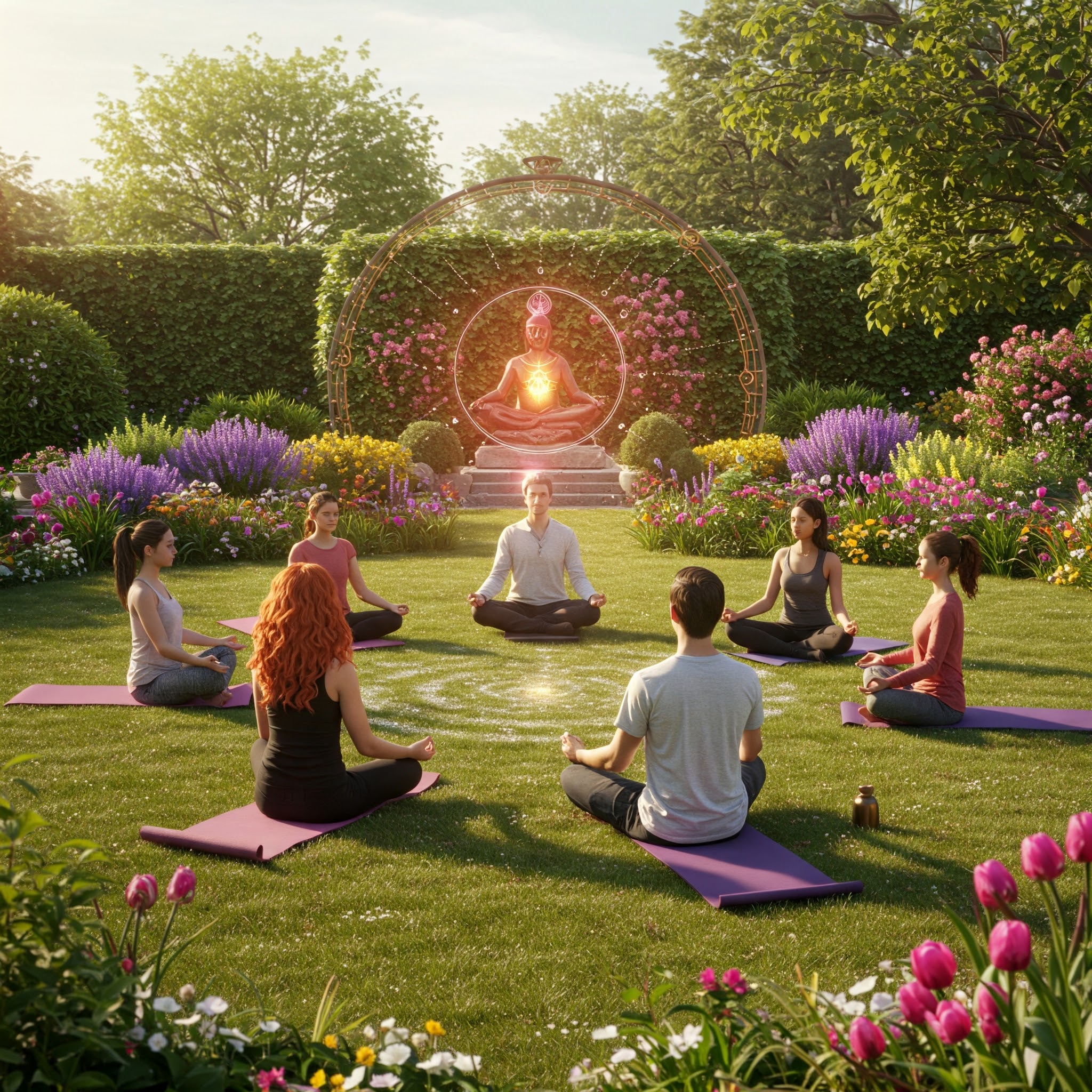
Why Gen Z Is Turning Towards Spirituality, Meditation and Tantra
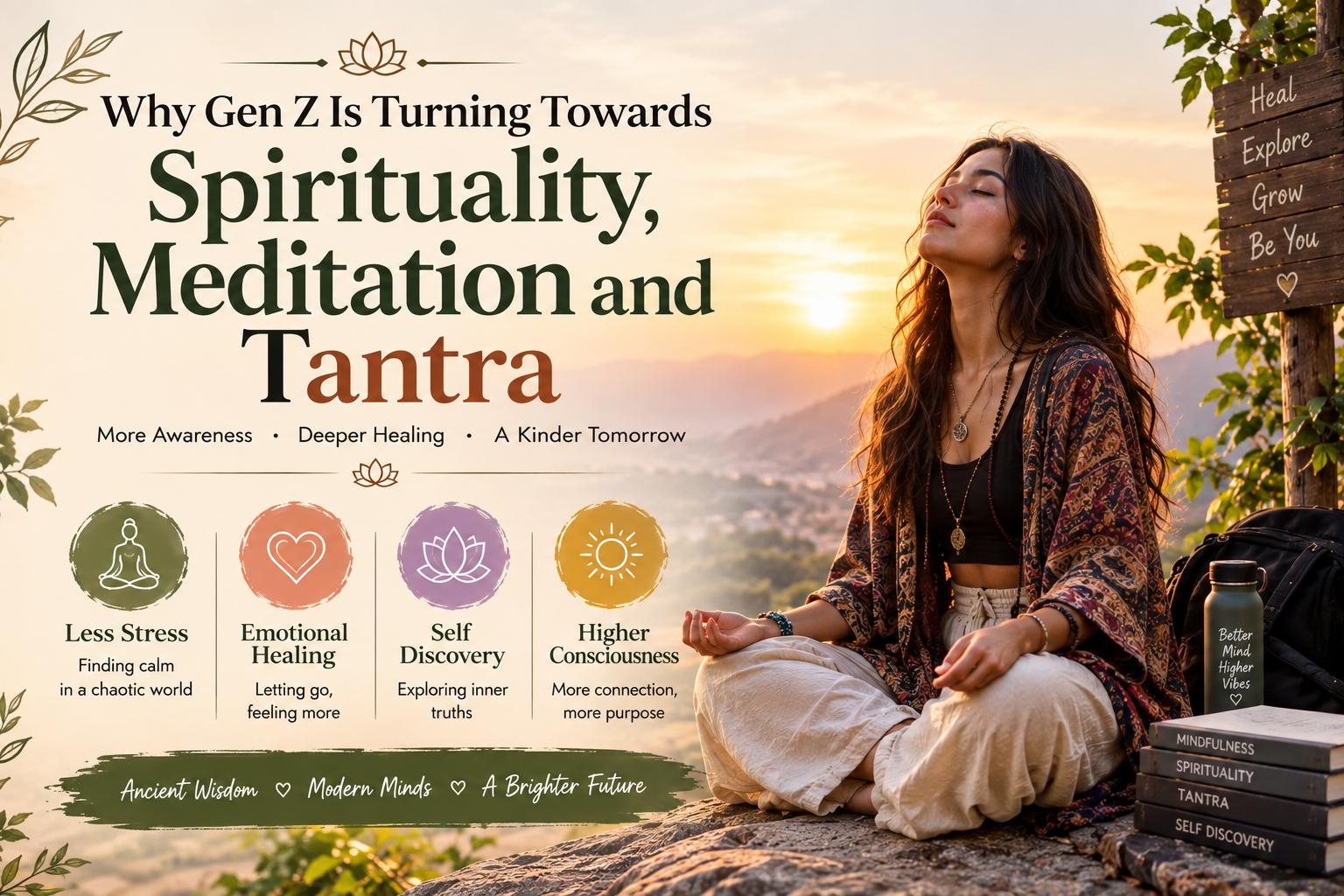
For a generation that has grown up with smartphones, social media, constant notifications and an always-connected lifestyle, the desire for something slower and more meaningful may seem surprising. Yet spirituality, meditation, mindfulness and other reflective practices are increasingly becoming part of conversations among young people.
In India and elsewhere, recent coverage has highlighted Gen Z\'s interest in meditation, spiritual retreats, astrology, chanting, yoga, pilgrimage and other practices that encourage reflection and connection. For many young people, spirituality is not necessarily about following a rigid set of traditions. Instead, it can be a personal journey focused on self-awareness, balance, purpose and inner peace.
This changing relationship with spirituality raises an interesting question:
Why is Gen Z turning towards spirituality, meditation and Tantra in the middle of such a digital and fast-paced world?
The Search for Peace in a Constantly Connected World
Gen Z has access to more information and communication than any previous generation, but constant connectivity can also create a feeling of never truly switching off.
Social media, academic expectations, career uncertainty, relationship pressures and comparison can make everyday life feel mentally crowded. Recent reporting on Gen Z spirituality in India has connected the growing interest in spiritual practices with the desire for calm, balance and a break from digital noise.
This does not mean every young person is experiencing spirituality in the same way. Rather, it suggests that some young people are exploring practices that create moments of pause and reflection.
Meditation can provide one such pause.
Instead of constantly consuming information, meditation encourages a person to sit quietly, observe their thoughts and bring attention back to the present moment.
Spirituality Is Becoming More Personal
One important change is that spirituality does not always look the same for everyone.
Some people may connect with traditional prayer or temple visits. Others may explore meditation, yoga, breathwork, journaling, chanting, nature, astrology or philosophical teachings.
Research and reporting on young people increasingly describe spirituality as something that can be personalized rather than limited to formal religious participation. A 2025 Springtide survey of young people aged 13–25, for example, examined spirituality through several dimensions, including belief, identity, practice and community.
Similarly, reporting on young Indians has described a growing interest in spiritual experiences that are personal and reflective rather than simply ritualistic.
For Gen Z, the question may therefore be less about following one particular path and more about discovering practices that feel meaningful and authentic.
Why Meditation Appeals to Gen Z
Meditation is one of the most accessible spiritual practices because it does not necessarily require complicated equipment, expensive resources or a particular lifestyle.
A few quiet minutes can become an opportunity to:
- Slow down
- Observe thoughts without immediately reacting to them
- Become more aware of the present moment
- Develop a regular period of stillness
- Reflect on emotions and personal experiences
- Create space between stimulation and response
The broader wellness industry is also increasingly treating mindfulness and mental wellbeing as everyday wellness concerns. McKinsey\'s 2025 wellness research found that younger consumers, particularly Gen Z, reported unmet needs around areas including mindfulness, mental health and cognitive health.
At the same time, meditation should not be presented as a cure for mental-health conditions. People experiencing significant or persistent psychological distress may need support from a qualified healthcare professional.
The Growing Curiosity Around Tantra
Tantra is another area attracting curiosity, although it is often misunderstood.
Popular culture has sometimes reduced Tantra to sexuality or sensationalized ideas. Traditional Tantra, however, encompasses much broader philosophical and spiritual traditions, with practices and interpretations varying across lineages.
For someone encountering the subject for the first time, it is important to approach Tantra with context rather than assumptions.
At AAdi Spiritual, Tantra can be introduced as a pathway for deeper awareness, presence and connection with oneself rather than simply as a trend.
For younger people who are interested in understanding themselves more deeply, this perspective can make Tantra an intriguing subject of exploration.
Tantra and the Desire for Self-Awareness
Modern life often encourages people to focus outward: achievements, appearance, career progress, social status and online identity.
Spiritual practices can encourage the opposite movement — turning attention inward.
This can involve becoming more aware of:
- Thoughts and emotional patterns
- Personal boundaries
- The relationship between body and mind
- Habits and reactions
- The quality of one\'s attention
- Feelings of connection and disconnection
Tantra, meditation and other contemplative practices can approach self-awareness through different methods and traditions.
The goal should not be to chase a particular experience. Instead, the value can lie in developing greater awareness of one\'s own experience.
From Digital Connection to Real Connection
There is another reason spirituality may resonate with younger people: the desire for genuine human connection.
Social media can connect people across continents, but digital interaction is not always the same as being physically present with others.
Interestingly, recent coverage of Gen Z spirituality in India has highlighted communal experiences such as kirtan, bhajan gatherings and other collective spiritual events. Vogue India described these newer gatherings as ways younger people are exploring spirituality through shared experiences, music and community.
This suggests that modern spirituality is not necessarily becoming more isolated.
In some cases, it may be creating new forms of community.
Spirituality and Modern Wellness
For many young adults, spirituality is becoming connected with a broader understanding of wellbeing.
Instead of separating physical health, emotional wellbeing and inner life completely, people are increasingly interested in approaches that consider the person more holistically.
This can include:
Meditation — developing presence and awareness.
Yoga — connecting movement, breath and attention.
Mindfulness — becoming more conscious of everyday experiences.
Journaling — creating space for personal reflection.
Breathwork — using conscious breathing as a practice for relaxation and awareness.
Spiritual study — exploring philosophical and contemplative traditions.
Tantra — exploring awareness, presence and deeper connection through specific traditional approaches.
Each practice has its own history, methods and context, so they should not simply be treated as interchangeable wellness trends.
Is Gen Z Rejecting Tradition?
Not necessarily.
A more accurate way to understand the trend is that some young people are re-examining tradition.
They may question practices they do not understand while becoming curious about practices that offer personal meaning. They may combine modern wellness approaches with elements of cultural or spiritual traditions.
Recent Indian reporting has described this as a more individualized approach to spirituality, where young people may explore traditional practices alongside contemporary lifestyles.
In this sense, spirituality may be evolving rather than disappearing.
How to Begin a Spiritual Practice
You do not need to completely change your lifestyle to begin exploring spirituality.
A simple starting point could be:
1. Start with a few minutes of silence
Put your phone away and sit quietly for five minutes.
2. Observe your breathing
Notice your natural breathing without trying to force it.
3. Reduce digital distractions
Create small periods during the day without unnecessary notifications or scrolling.
4. Explore meditation
Try a simple mindfulness or guided meditation and observe how you respond to it over time.
5. Learn before practising Tantra
If you are curious about Tantra, begin by learning about its history, philosophy and different traditions rather than relying on social-media stereotypes.
6. Find a trustworthy guide
If you decide to explore a spiritual practice more deeply, choose teachers or practitioners who explain their approach clearly, respect personal boundaries and avoid exaggerated promises.
A New Generation Looking for Something Deeper
The growing interest in spirituality among Gen Z does not necessarily mean that young people are abandoning modern life.
In many cases, they may simply be looking for ways to create balance within it.
They can use technology while also wanting moments without screens. They can value career ambitions while questioning what success means. They can enjoy modern wellness culture while becoming curious about ancient traditions.
That combination is perhaps what makes today\'s spiritual movement different.
It is not necessarily about escaping modern life.
It can be about learning how to live it with greater awareness.
At AAdi Spiritual, the exploration of Tantra, meditation and spiritual wellness can be approached as a journey toward greater self-awareness, presence and inner connection.
Whether someone begins with five minutes of meditation, a deeper study of spiritual philosophy or curiosity about Tantra, the journey can begin with something simple:
Pause. Breathe. Become aware. And listen inward.
Frequently Asked Questions
Is Gen Z really becoming more spiritual?
Recent surveys and reporting indicate that many young people are engaging with spiritual or religious practices, although the ways they do so vary considerably. Some explore meditation and mindfulness, while others connect with traditional religious practices, community gatherings or personal spiritual exploration.
Why is meditation becoming popular among young people?
Meditation is relatively accessible and can provide a structured opportunity to pause, focus attention and reflect. Current wellness research also indicates that younger consumers place substantial importance on areas such as mindfulness and mental wellbeing.
What is Tantra?
Tantra refers to diverse spiritual and philosophical traditions with different teachings and practices across historical lineages. It should not be reduced to the common modern stereotype that equates Tantra exclusively with sexuality.
Can beginners explore Tantra?
Yes, beginners can learn about Tantra, but it is important to start with reliable information and understand the particular tradition or approach being taught. Personal boundaries, informed consent and qualified guidance are important considerations when participating in any hands-on or experiential practice.
Does spirituality mean following a religion?
Not necessarily. Spirituality can be expressed through religious traditions, but some people explore spirituality through meditation, contemplation, philosophy, nature, mindfulness or other personal practices. The meaning of spirituality varies between individuals.