How to Build a Daily Spiritual Practice: A Simple Guide to Finding Inner Peace and Balance
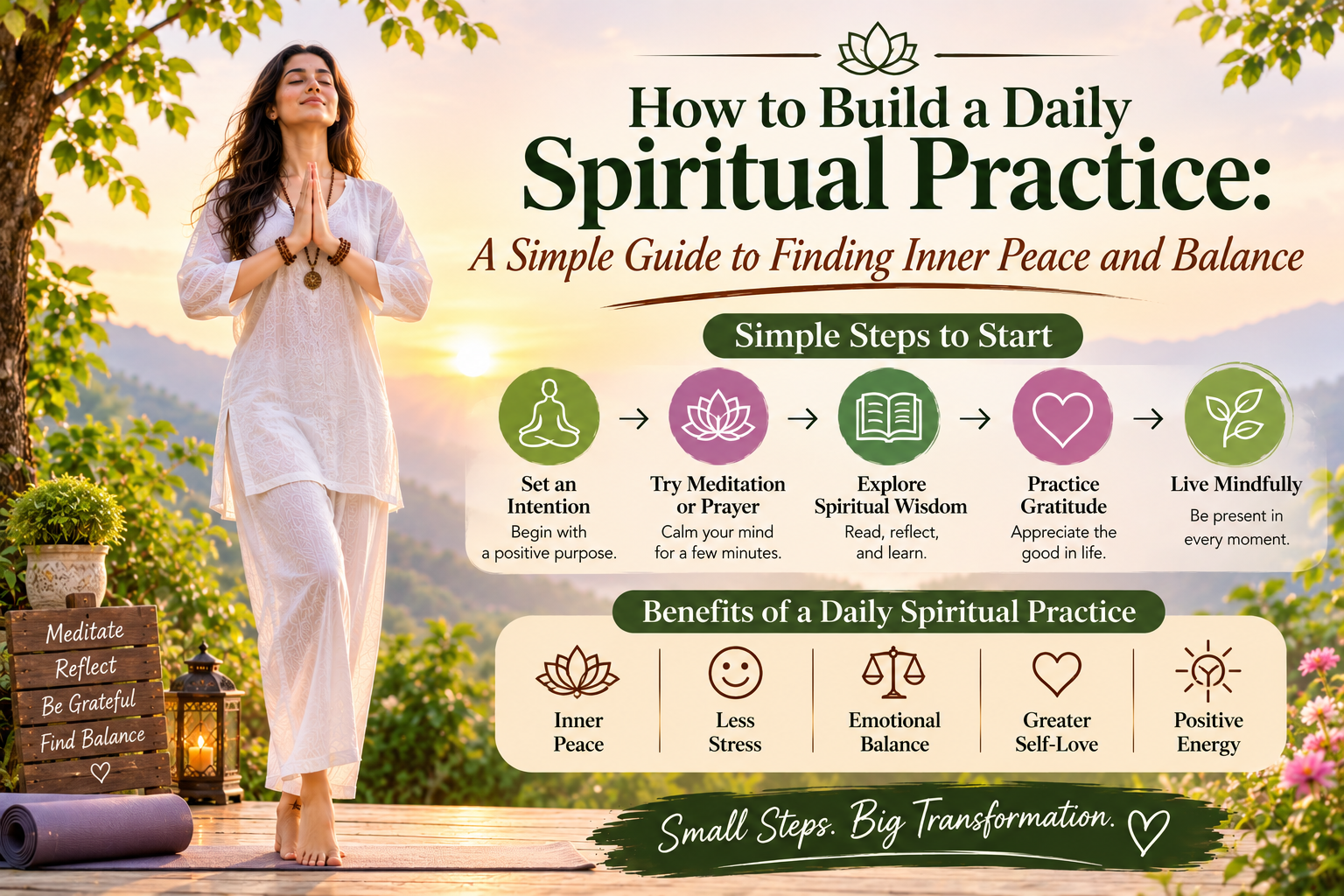
In today\'s fast-paced world, life often feels filled with responsibilities, distractions, stress and endless notifications. We spend much of our time taking care of work, relationships and daily commitments, but often forget to give attention to our inner well-being. This is where building a daily spiritual practice can make a meaningful difference.
Spirituality is not necessarily about following a particular religion or performing complicated rituals. It is about understanding yourself, developing inner awareness and creating a deeper connection with your mind, body and inner self.
A daily spiritual practice does not require hours of meditation or a complete lifestyle change. Even a few mindful minutes every day can help you develop self-awareness, emotional balance and a greater sense of inner peace.
At AAdi Spiritual, we believe that spirituality is a journey of self-discovery, mindfulness and holistic well-being. Let\'s explore how you can build a simple and meaningful spiritual routine.
1. Start Your Day With Mindfulness
The way you begin your morning can influence how you approach the rest of your day. Instead of immediately checking your phone, emails or social media, take a few minutes to connect with yourself.
Sit comfortably, close your eyes and observe your breathing. Allow your thoughts to settle without trying to control them.
You can also begin your morning with a positive intention, such as:
-
I choose peace over stress.
-
I will remain mindful throughout the day.
-
I am grateful for the opportunities life brings.
-
I will treat myself and others with kindness.
Starting your morning mindfully can help you develop a calmer and more positive approach to everyday situations.
2. Make Meditation a Daily Habit
Meditation is one of the simplest ways to introduce spirituality into your daily routine. It encourages you to become more aware of your thoughts, emotions and breathing.
If you are a beginner, start with just 5 to 10 minutes every day. Find a quiet place, sit comfortably and focus on your natural breathing.
You do not need to stop thinking completely. Whenever your mind wanders, gently bring your attention back to your breath.
With regular practice, meditation can support relaxation, concentration, emotional awareness and stress management.
Consistency is more important than duration. A few minutes of daily meditation can be more beneficial for building a lasting habit than occasional long sessions.
3. Practice Gratitude Every Day
Gratitude is a simple spiritual practice that helps you appreciate the positive aspects of life.
Many people spend their time focusing on what they lack, what went wrong or what they want to achieve next. Practising gratitude encourages you to recognise the meaningful things that already exist in your life.
Every morning or evening, write down three things you feel grateful for.
These could be:
-
Your family and loved ones.
-
Your health and everyday opportunities.
-
A peaceful moment during the day.
-
A lesson learned from a difficult experience.
-
The simple beauty of nature.
Over time, gratitude can encourage a more positive outlook and help you become more mindful of everyday experiences.
4. Connect With Your Body Through Breathwork
Breathing is something we do naturally, but paying attention to our breath can become a powerful mindfulness practice.
Breathwork involves consciously observing or gently regulating your breathing to encourage relaxation and awareness.
You can begin with a simple breathing exercise:
-
Sit comfortably in a quiet place.
-
Relax your shoulders and face.
-
Slowly inhale through your nose.
-
Gently exhale without forcing your breath.
-
Repeat for a few minutes while remaining aware of each breath.
Practising mindful breathing can help you pause during stressful moments and reconnect with the present.
Always practise comfortably and avoid forcing or holding your breath, especially if you are new to breathwork.
5. Explore Spirituality Through Tantra
Tantra is an ancient spiritual tradition that involves awareness, consciousness and the relationship between mind, body and energy.
Contrary to common misconceptions, Tantra is much broader than physical intimacy. Traditional Tantric practices include meditation, breath awareness, mantra, mindfulness and spiritual disciplines.
For someone building a daily spiritual routine, exploring Tantra can provide another perspective on self-awareness and conscious living.
Some simple ways to explore Tantric principles include:
-
Practising mindful breathing.
-
Becoming aware of your thoughts and emotions.
-
Developing a deeper connection with your body.
-
Spending time in meditation.
-
Practising compassion and conscious awareness.
Tantra encourages individuals to approach life with greater presence and awareness rather than moving through everyday experiences unconsciously.
6. Spend Time in Silence and Nature
Modern life rarely gives us opportunities to experience complete silence. Continuous notifications, conversations, traffic and digital distractions can make it difficult to focus on ourselves.
Spending time in nature or sitting quietly can help create space for reflection.
Try taking a short morning walk, sitting in a garden, watching the sunrise or simply spending ten minutes without your phone.
During this time, observe your surroundings, listen to natural sounds and become aware of your thoughts.
You do not need to perform any special activity. Sometimes, simply being present is itself a meaningful spiritual practice.
7. Read Spiritual Books and Reflect on Their Teachings
Learning is an important part of spiritual growth. Reading spiritual books, philosophical teachings and mindfulness-related content can introduce you to different perspectives on life and consciousness.
You can explore subjects such as:
-
Meditation and mindfulness.
-
Ancient Tantric philosophy.
-
Yoga and spiritual awareness.
-
Self-discovery and personal growth.
-
Emotional balance and conscious living.
However, spiritual growth is not just about collecting information. Take time to reflect on what you read and consider how those teachings can be applied to your everyday life.
Even reading a few pages each day can gradually deepen your understanding.
8. Practise Kindness and Compassion
Spirituality is not limited to meditation, rituals or personal reflection. The way you treat yourself and other people is equally important.
Practising kindness, patience, honesty and compassion can bring spiritual values into your everyday interactions.
You can begin with small actions:
-
Listen to others without immediately judging them.
-
Offer help whenever possible.
-
Avoid unnecessary negativity.
-
Treat yourself with patience.
-
Respect other people\'s feelings and perspectives.
A meaningful spiritual practice should gradually influence how you live, communicate and respond to the world around you.
9. Create a Simple Daily Spiritual Routine
One of the biggest mistakes beginners make is trying to change everything at once. A complicated routine can become difficult to maintain.
Instead, begin with small activities that fit naturally into your lifestyle.
Here is a simple daily spiritual routine you can follow:
Morning (10–15 minutes)
-
5 minutes of meditation.
-
3 minutes of mindful breathing.
-
2 minutes of gratitude and positive intentions.
Afternoon (5 minutes)
-
Take a short mindfulness break.
-
Observe your breathing.
-
Step away from digital distractions.
Evening (10 minutes)
-
Reflect on your day.
-
Read a few pages of a spiritual book.
-
Practise gratitude before sleeping.
You can adjust this routine according to your schedule, interests and personal comfort. The goal is to build consistency rather than follow a perfect timetable.
10. Be Patient With Your Spiritual Journey
Spiritual growth is not a competition, and there is no fixed timeline for achieving inner peace or self-awareness.
Some days, meditation may feel peaceful. On other days, your mind may feel restless or distracted. Both experiences are normal.
Avoid comparing your spiritual journey with someone else\'s. Focus on understanding yourself and gradually developing habits that support your overall well-being.
Remember that spirituality is not about becoming perfect. It is about becoming more conscious, compassionate and connected with yourself.
Common Mistakes to Avoid When Starting a Spiritual Practice
If you are new to spirituality, keeping a few things in mind can make your journey easier.
Expecting instant results: Spiritual habits take time to develop. Give yourself enough time to understand each practice.
Trying too many practices at once: Start with meditation, gratitude or mindful breathing before adding more activities.
Following trends without understanding them: Explore spiritual teachings thoughtfully instead of adopting every practice you encounter online.
Being too hard on yourself: Missing a day does not mean you have failed. Simply return to your routine when you can.
Focusing only on rituals: Spirituality also involves your thoughts, behaviour, awareness and everyday choices.
Conclusion: Make Spirituality a Part of Your Everyday Life
Building a daily spiritual practice does not require a dramatic lifestyle transformation. It begins with small, meaningful actions that help you reconnect with yourself.
Whether you choose meditation, breathwork, gratitude, Tantra or mindful living, the most important thing is to practise with patience and consistency.
As you develop these habits, you can create more opportunities for self-reflection, emotional awareness and a balanced approach to life.
At AAdi Spiritual, we encourage individuals to explore spirituality as a journey of self-discovery, inner awareness and holistic well-being. Start with a few mindful minutes today and allow your spiritual journey to grow naturally, one day at a time.
Your spiritual journey begins not when life becomes perfect, but when you make time to connect with yourself.