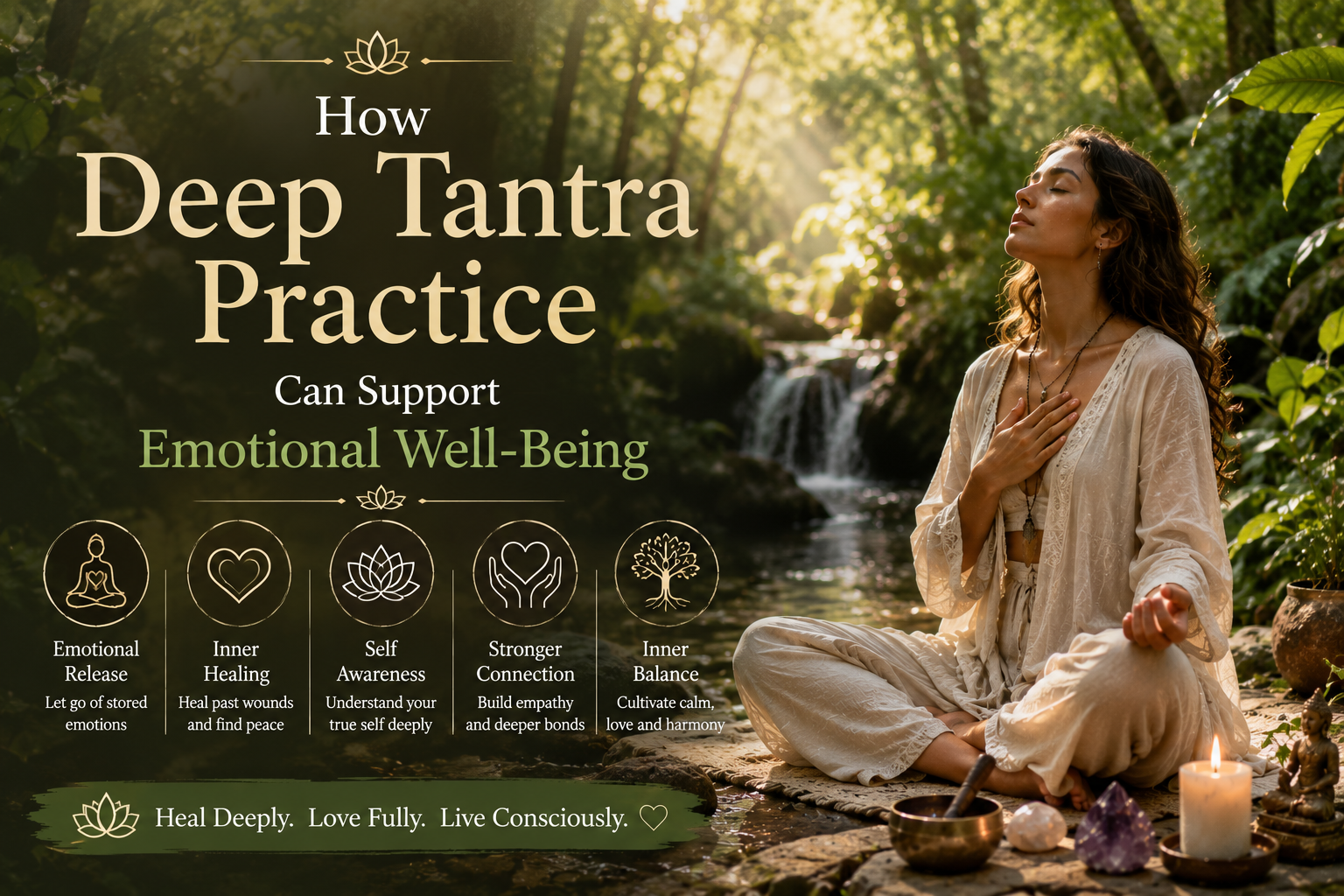
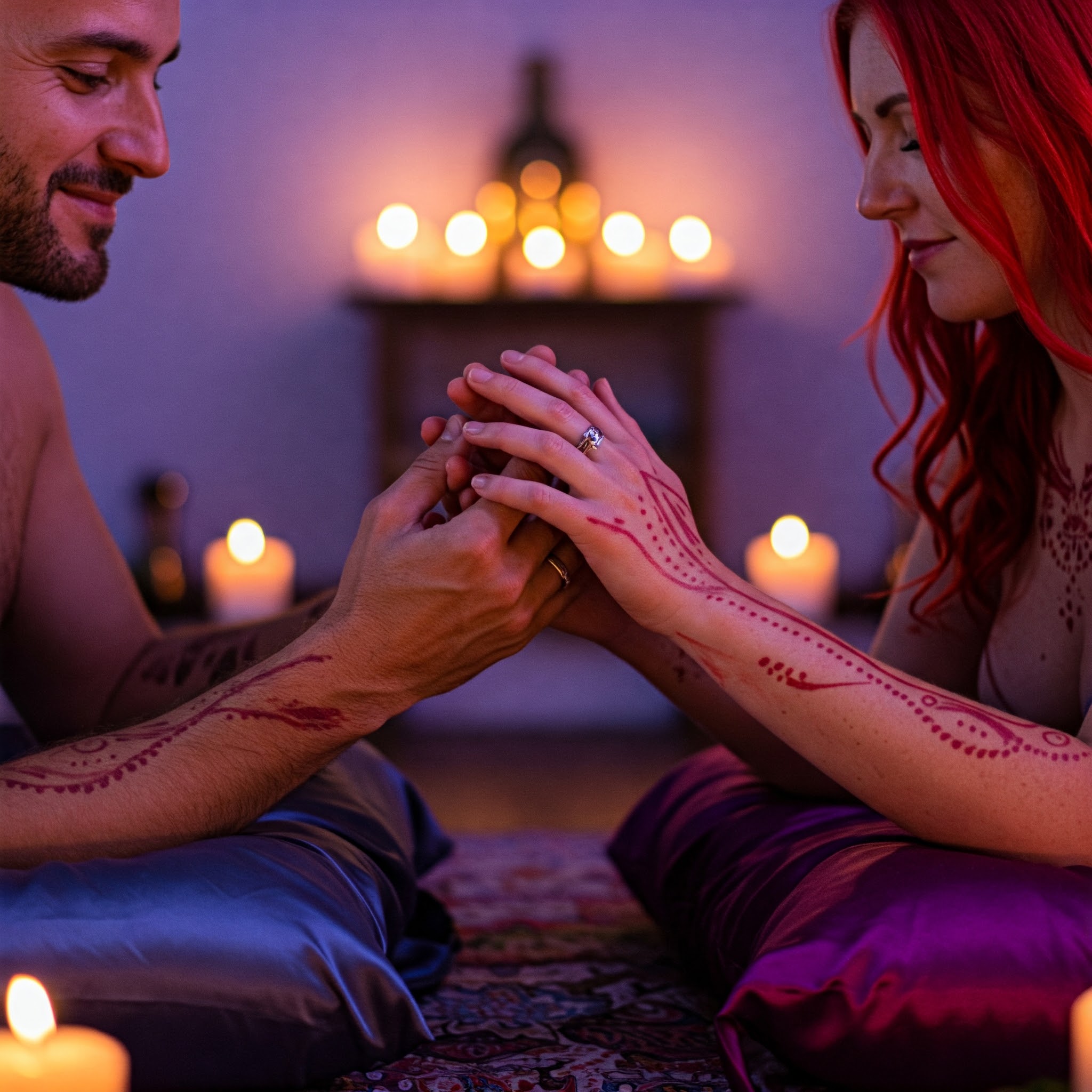
What Is Tantra The Real Meaning of Tantra Beyond Myths and Misconceptions
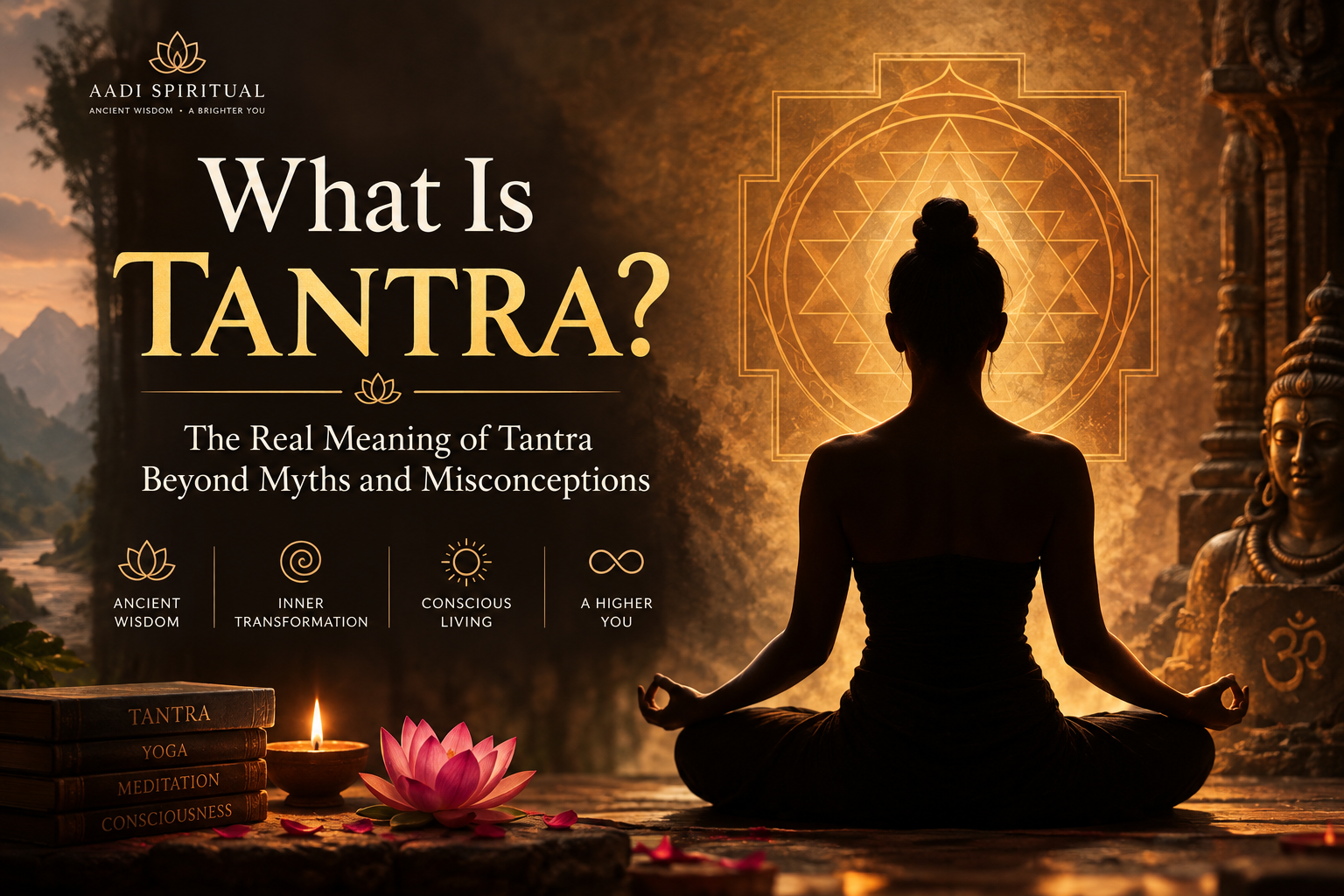
Tantra is one of the most misunderstood spiritual traditions in the world. For many people, the word immediately brings up associations with sexuality, mysticism, or secret rituals. Others imagine Tantra as something mysterious and inaccessible, reserved only for advanced spiritual practitioners.
But the authentic meaning of Tantra is far broader and deeper.
Tantra is a spiritual path rooted in ancient Indian traditions that explores awareness, energy, consciousness, transformation, and the connection between the individual and the larger reality. Rather than asking us to reject everyday life, many Tantric traditions teach us to become more conscious of our experiences and use them as opportunities for inner growth.
At AAdi Spiritual, we believe that understanding Tantra begins with moving beyond popular misconceptions and discovering its deeper spiritual philosophy.
What Does the Word Tantra Mean?
The Sanskrit word Tantra is traditionally associated with ideas such as a framework, system, or method for spiritual practice. It is connected with the idea of expanding consciousness and developing a deeper understanding of existence.
Tantra is not a single technique or one universal practice. Instead, it refers to a broad collection of spiritual traditions, philosophies, texts, meditation methods, rituals, mantras, visualizations, and approaches to self-realization that developed across India and, in different forms, influenced traditions in other parts of Asia.
This diversity is important because there is no single practice that can accurately represent everything called Tantra.
Tantra Is Not Simply About Sexuality
Perhaps the biggest misconception about Tantra is that it is primarily a sexual practice.
This misunderstanding has become especially common in modern popular culture. While certain Tantric traditions have included teachings involving relationships, masculine and feminine principles, or sexuality, reducing Tantra to sexual practices overlooks the enormous spiritual and philosophical dimensions of the tradition.
Traditional Tantra encompasses practices such as:
-
Meditation
-
Mantra
-
Breath awareness
-
Visualization
-
Ritual practice
-
Concentration
-
Deity contemplation
-
Energy awareness
-
Self-inquiry
-
Consciousness practices
The deeper purpose of these practices is transformation of awareness.
In other words, Tantra is not about chasing pleasure. It is about developing greater consciousness and learning to relate to life with awareness.
Tantra and the Idea of Consciousness
At the heart of many Tantric traditions is the understanding that consciousness is fundamental to human experience.
We usually move through life reacting automatically to our thoughts, emotions, habits, desires, fears, and circumstances. Tantra encourages us to become more aware of these experiences rather than being completely controlled by them.
Instead of immediately reacting, we learn to observe.
Instead of suppressing every difficult emotion, we learn to understand it.
Instead of running away from ourselves, we begin to explore our inner world.
This shift from unconscious reaction to conscious awareness is an important aspect of spiritual transformation.
Is Tantra a Religion?
Tantra itself should not simply be described as a religion.
Tantric traditions developed within several spiritual and religious environments, particularly within Hindu and Buddhist traditions. There are therefore many different Tantric schools, philosophies, texts, and practices.
Some traditions emphasize devotion. Others emphasize meditation, ritual, mantra, philosophical inquiry, or direct exploration of consciousness.
Because of this diversity, it is more accurate to understand Tantra as a broad spiritual approach rather than treating it as one uniform religion.
Tantra and the Union of Opposites
Another important concept found in many Tantric traditions is the recognition of complementary forces.
Life contains many apparent opposites:
-
Stillness and movement
-
Masculine and feminine
-
Inner and outer
-
Awareness and experience
-
Creation and dissolution
-
Individuality and universality
Tantric philosophy often explores how these seemingly separate aspects can be understood as interconnected.
This is one reason symbolism involving Shiva and Shakti appears so prominently in some Tantric traditions.
Rather than viewing life as something that must simply be escaped, Tantra can encourage us to understand the relationship between consciousness and the world we experience.
What Is Shakti in Tantra?
In many Hindu Tantric traditions, Shakti represents divine energy or the dynamic power of consciousness.
Shakti is often associated with creativity, movement, transformation, and manifestation.
Shiva, in various Tantric interpretations, represents pure consciousness, while Shakti represents its dynamic expression.
The symbolism points toward a deeper idea: consciousness and energy are not necessarily separate.
For practitioners, this can become a way of understanding their own inner experience. Awareness, breath, emotions, attention, and vitality can all become objects of conscious exploration.
Tantra and Meditation
Meditation is an important component of many Tantric traditions.
However, Tantric meditation can take many forms. Depending on the tradition, practitioners may work with:
-
Breath
-
Mantra
-
Visualization
-
Sacred symbols
-
Internal awareness
-
Concentration
-
Sensory awareness
-
Contemplation
-
Awareness of thoughts and emotions
The purpose is not simply to sit quietly for a certain amount of time.
The deeper objective is to cultivate awareness.
With regular practice, meditation can become more than something we do for a few minutes each day. Awareness can gradually become part of how we experience ordinary life.
Tantra Does Not Mean Rejecting the World
One fascinating aspect of many Tantric approaches is their relationship with everyday life.
Some spiritual paths have historically emphasized withdrawal from worldly experiences. Tantra, in many of its forms, takes a different approach.
Rather than automatically seeing ordinary experiences as obstacles, Tantric practice can encourage us to meet life consciously.
Eating, breathing, observing nature, listening, movement, relationships, emotions, and moments of silence can all become opportunities to cultivate awareness.
The important distinction is how we experience something.
An unconscious experience may reinforce habitual patterns.
A conscious experience can become an opportunity for observation and transformation.
Common Myths About Tantra
Myth 1: Tantra is only about sex
This is the most widespread misconception.
Sexuality may appear in certain Tantric traditions and modern interpretations, but Tantra cannot be reduced to sexuality. Meditation, mantra, ritual, philosophy, visualization, energy practices, and consciousness are all important parts of the broader Tantric landscape.
Myth 2: Tantra is black magic
Tantra is sometimes incorrectly associated with supernatural powers or harmful occult practices.
While some historical Tantric traditions contain ritual and esoteric elements, equating Tantra with black magic gives an extremely incomplete picture of the tradition.
Authentic Tantric philosophy is deeply concerned with consciousness, spiritual practice, transformation, and liberation.
Myth 3: Tantra is something mysterious that only a few people can understand
Tantric texts can certainly be complex, symbolic, and highly sophisticated.
But the fundamental principle of becoming more conscious is accessible to anyone willing to explore themselves sincerely.
A spiritual practice does not become meaningful simply because it is secret or complicated.
Myth 4: Tantra means doing rituals without understanding them
Ritual can be an important part of some Tantric traditions, but ritual without awareness can easily become mechanical.
Tantric practice places importance on intention, attention, symbolism, and consciousness.
Understanding the meaning behind a practice is therefore just as important as performing the practice itself.
Why Are People Interested in Tantra Today?
Modern life is increasingly fast, noisy, and digitally connected.
People spend hours looking at screens, responding to notifications, working under pressure, and constantly consuming information. At the same time, many people are searching for deeper meaning, inner balance, and a stronger connection with themselves.
This is one reason ancient spiritual practices continue to attract modern interest.
Tantra can offer a different way of approaching life: not necessarily escaping the world, but becoming more conscious within it.
For someone experiencing constant mental stimulation, the idea of slowing down and becoming deeply aware of one\'s own experience can be powerful.
Tantra and Modern Spiritual Wellness
Modern spiritual wellness often focuses on mindfulness, meditation, self-awareness, breathwork, energy practices, and holistic approaches to wellbeing.
Some of these practices have connections with ancient Indian traditions, although they should not automatically be described as identical to traditional Tantra.
This distinction matters.
Authentic spiritual traditions deserve to be approached with respect, context, and understanding rather than being turned into simplified trends.
At the same time, people today can meaningfully explore traditional practices when they are taught responsibly and with appropriate guidance.
How Can a Beginner Explore Tantra?
If you are curious about Tantra, you do not need to begin with complicated rituals or esoteric practices.
A beginner can start with simple foundations:
1. Develop awareness
Spend a few minutes each day observing your breath, thoughts, emotions, and physical sensations without immediately reacting to them.
2. Practice meditation
Start with a simple meditation practice and gradually develop consistency.
3. Learn about the philosophy
Understanding the principles behind a practice can make your spiritual journey more meaningful.
4. Explore mantra and traditional practices responsibly
If you want to explore deeper Tantric practices, learning from a knowledgeable and responsible teacher can help you understand the tradition within its proper context.
5. Bring awareness into everyday life
Spiritual practice does not have to remain separate from ordinary life.
Try bringing greater awareness to the way you eat, speak, listen, work, rest, and interact with others.
Tantra Is a Journey of Awareness
The real meaning of Tantra is much richer than the stereotypes often presented online.
It is not simply about sexuality. It is not synonymous with black magic. And it is not merely a collection of mysterious rituals.
Tantra represents a diverse family of spiritual traditions that explore consciousness, energy, awareness, transformation, and the possibility of experiencing life more deeply.
When approached with respect and proper understanding, Tantra can become a profound path of self-exploration.
Perhaps the most useful way to understand Tantra is not as something strange or exotic, but as an invitation to become more conscious of yourself, your experience, and the life you are living.
Begin Your Spiritual Journey With AAdi Spiritual
If you are interested in exploring meditation, Tantra, spiritual wellness, and deeper self-awareness, the first step is developing an understanding of the practices rather than following popular myths.
At AAdi Spiritual, our approach is centered on creating space for inner exploration, awareness, and holistic spiritual wellbeing.
Explore our spiritual practices and discover a path that helps you reconnect with yourself, cultivate awareness, and approach life with greater consciousness.
Your spiritual journey begins with awareness.